
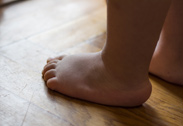
Developmental Changes During Baby’s First Year
Sitting up without support gives babies a new outlook on life. And once they’ve mastered this skill, they will eagerly move on towards crawling. Toys placed just out of reach will motivate them to lunge forward and discover ways to rock and scoot and move along the floor. As babies’ fine motor skills improve, they can pick up smaller objects, so be sure to provide small toys that fit comfortably in baby’s hands. An assortment of these on the high chair tray will keep baby occupied for a long time. This is also a great age to introduce simple activity books, and as baby grows, so should the complexity of these interactive books. As babies approach one year, fill and dump container play will keep them busy for hours. Object permanence is a concept that will be learned at this age, so hiding games become lots of fun. Babies will also show more interest in mirror play. And don’t forget to bring on the balls. Lightweight foam balls are fun for rolling and gentle tossing with a caregiver. Some babies will show readiness to stand and even begin walking. Walker toys that baby can hold onto and push across the room are perfect for this stage.
Here is what you can expect and how to support child development during the first year:
Gross Motor Development
During these months, significant advances in motor development take place. Babies progress from learning to sit well to leaning forward into a crawling position. They will learn to pull themselves up into a standing position to cruise along furniture, and some go-getters will even begin walking before age one. Here are some ways you can promote these gross motor skills through interactive play:
- As your baby becomes an expert at sitting, make a “play circle” together with your legs while you sit facing each other during play. This is perfect for block play and container play.
- Entice your sitting baby to lean forward into a crawling position by putting his favorite toys just beyond his reach. Musical toys and rattles are great for this.
- Your crawling baby will love to play “fetch” as you roll her favorite ball across the room.
- Once baby is sitting comfortably, baths take on a whole new meaning. Turn these wash times into a splashing fun time as you help baby become comfortable in the water.
- Play “treasure hunt” with your crawling baby. Place his favorite blocks around the room and encourage him to gather them up.
Fine Motor Development
Babies begin to use their fingers more skillfully, and will eventually master the thumb-and-finger pincer grasp on tiny objects. Picking up blocks and other small toys with one hand will become second nature, and you will commonly see a toy in each hand while baby looks around for a third. Eventually baby will begin container play and spend hours putting things in and dumping them out again. Here are some ways you can promote these fine motor skills through interactive play:
- At this age babies are more easily entertained during a long car ride with a few favorite toys to keep their hands busy.
- Colorful balls are a great tool for baby’s playtime to work on his one-handed grasping and “fill and dump” container play.
- During bath time, add a few floating bath toys to the water to keep baby’s reaching hands busy while you wash off the day’s dirt.
- Surround your sitting baby with his favorite blocks or other small objects so he can practice his reach and grab.
- Your baby can begin to appreciate different touch sensations with his fingers. Offer your baby as many different textures as you can.
- Discovering baby’s toes and pulling them up to his mouth is a fun exercise. Put some foot rattles onto baby’s feet to encourage this discovery.
- Activity books are a great outlet for baby’s curious fingers and will get your child interested in books at a young age.
Social and Cognitive Development
Baby’s responsiveness to caregiver’s interactions becomes more rewarding, and baby will frequently “flirt” with whoever is looking his way. During these months baby will begin to respond specifically to his own name. Waving and clapping are fun skills that you will see baby pick up. Baby’s inquisitive nature will prompt him to systematically explore every interesting nook and cranny of his domain. Baby-proofing becomes increasingly important. Here are some ways you can promote your baby’s social and cognitive skills through interactive play:
- Playing peek-a-boo is a perfect game to exercise baby’s social responses. A large ball, toy doll, or even your own hands to hide behind work great.
- Babies begin to mimic your actions. Bath is a perfect time to show your baby how to have a splashing fun time.
- Clapping hands is another way your baby will thrill to imitate you. Be sure to cheer her on.
- Your baby will be intrigued with the concepts of “in” and “out”. Help your baby understand container play by showing him how to play with a bucket and blocks.
- Infants begin to pick and choose between toys. While your baby is engaged with a toy in each hand, place a third in front of her to exercise her decision-making skills.
- Waving bye-bye can be made even more fun and social using colorful finger puppets.
- Mirrors are a fun way to interact with your baby. Explore your reflections together.
Hearing and Language Development
During these months baby’s cute little “coos” and “goos” will mature into babbling with consonant sounds. Baby will begin to talk her own language of jabbering as she imitates the language patterns of those around her. A few precocious talkers may even surprise you with their first word before age one. Baby’s understanding of various phrases will begin, such as “No” and “Come see daddy”. Baby will continue to be intrigued by sounds that she can create on her own during play. Here are some ways you can promote your baby’s hearing and language skills through interactive play:
- Banging two wooden blocks together is a great way for your baby to learn how to create sounds. Grab two blocks yourself and play along.
- Sounds are a great way to draw your baby into playtime with you. Dropping or shaking her wooden blocks in a plastic bucket is sure to get her attention.
- Banging, shaking, and blowing musical toy instruments will become a favorite activity for your baby. Get her started early and cheer on her “talent”.
- Musical toys will continue to interest your baby. Hum and sing along and your baby will try to mimic you and join in with his own “singing”.
If you would like to work with a Certified Health Coach during your pregnancy, or postpartum, you can find a Coach in your area.