
AskDrSears Logo
homeabout searsbooksnewsletterfaqsresourcesnewsstorecontact us
what's newregular featurespediatric newsDoctor's Diaries


Search


pregnancy & childbirth
breastfeeding
bottlefeeding
feeding infants & toddlers
family nutrition
discipline & behavior
fussy babies
sleep problems
childhood illnesses
medicine cabinet
a to z index
GoFish Omega 3 DHA Attachment Parenting Vaccines Lean


Family Nutrition

  • Sign-up for E-Newsletter
  • Special Offers
  • Send to a Friend
close
   
Get important information and valuable advice from the Dr. Sears Family
Email:
First Name:
Would you also like to receive special promotions on Dr Sears Books and Products?
Yes No


Your privacy is a PRIMARY consideration of AskDrSears.com. Your e-mail address is used ONLY by AskDrSears.com for the purpose of announcing news, events and special offers available only AskDrSears.com registered users.
close
Balboa Sling

Dr. Sears Original Baby Sling, by Balboa Baby
Same safety features you’ve come to trust, new updated design. Seven new patterns to choose from. Designed to grow, Dr. Sears Original Baby Sling, by Balboa Baby, offers comfort and hands-free motion while promoting bonding.

Introductory Special $10.00 off exp 07/31/08
discount code: newsling

Click here to order.


*Not valid in conjuction with any other offers.
close
Your Information:
Email:
First Name:
Please send me your newsletter
I would also like to receive special promotions on Dr Sears Books and Products?
    Send to:
Email:
First Name:
Message to friend:


Your privacy is a PRIMARY consideration of AskDrSears.com. Your e-mail address is used ONLY by AskDrSears.com for the purpose of announcing news, events and special offers available only AskDrSears.com registered users.
JOY OF SOY
Topics you will find:
7 Reasons Why Soy is so Good for You
Types of Soy Products: Soy drinks, Tofu, Tempeh, Miso

The seven secrets of soy are just a few of the reasons more Americans are trading their sirloin for soy foods.

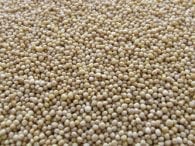
1. A nutrient-dense food. Few foods contain as much nutritional bang for the buck as this bountiful bean. Ounce for ounce, calorie for calorie, the soybean gets top-billing as a rich source of protein, unsaturated fats, fiber, B-vitamins, folic acid, potassium, calcium, zinc, and iron - and it's cholesterol-free. There is no other single food that supplies so much nutrition in such a tiny package. While TV and print ads tout milk as the perfect food, the soybean actually deserves this title.

2. Soy contains powerful proteins, healthier fats. Soy ranks right up there with the American staples -- dairy, eggs, and meat - as a rich source of protein, but without the fat drawbacks of these high-protein animal foods. Eggs, dairy, meat, and poultry contain mostly saturated fats, and they are high in cholesterol. Soy fat is mostly unsaturated and cholesterol- free. Soy is the only plant food that is a complete protein, meaning that it contains all the essential amino acids that the body can't produce. (However, soy does not contain enough of the amino acid methionine for infants and children, so this amino acid is added to soy formulas).

3. Soy has intestines-friendly carbs. Since soy is a plant food, it contains no lactose, which makes soy milk, soy cheese, and soy "yogurt" ideal alternatives to dairy products for persons who are sensitive to dairy. Soy contains nutritionally valuable carbs called "fructooligosaccharides" (FOS), which nourish the helpful intestinal bacteria.

4. Soy contains mood-friendly carbs. Soybeans have the lowest glycemic index of any food, so they are slow to trigger an insulin response, providing a more stable blood sugar with fewer mood swings from high and low blood sugars. This makes soy an ideal before-school breakfast food for preventing the mid-morning low blood sugar crash in sugar-sensitive children.

5. Soy is a terrific source of bone- and blood-building calcium and iron. Soy gets the "Top Bean" award for the two vital minerals calcium and iron, nutritional features that make it a valuable alternative to dairy products and meat. Like other legumes, soy is a rich source of iron, in fact the richest of all the vegetables and legumes.

6. Soy is the original health food. Soy is a heart-healthy, cancer-fighting, and immune- boosting food. Comparing the overall health of high soy-consuming cultures, such as the Japanese, and low soy-eating folk, like Americans, provides the first clue that soy has health- building properties. The average Japanese person eats 2 to 3 ounces (50 to 80 grams) of soy food daily in various forms, such as miso, tempeh, and soy milk. The average American eats a scant 5 grams of soy, and that mostly in the form of oils (often hydrogenated) hidden in high-fat foods. Comparing Japanese and American health: the Japanese enjoy a longer lifespan and lower rates of cancer (especially colon, lung, breast, and prostate) and have a much lower incidence of heart disease. It will be interesting to see if a reversal in these diseases occur as we export to the Japanese our beef and they sell us their soy. Heart and cancer doctors believe that adding as little as two ounces of soy to the daily American diet could lower the risk of these deadly diseases. In Oriental medicine, soybeans are valued as the tonic for long life and healthy living. In Oriental countries, soy is known as the "meat without bones" and the "cow of China." While soy alone won't save your life, here's how it can help.

  • Soy reduces cholesterol. Research has shown that replacing animal protein with 50 grams of soy protein a day can reduce cholesterol levels by 12 percent. Even better news is that soy protein lowers tryglycerides, reduces LDL (bad) cholesterol, and raises HDL (good) cholesterol. In fact, soy is one of the few foods that selectively reduces LDL cholesterol. Much of the cholesterol-lowering effect of soy has been attributed not only to the soy protein, but also to the fiber and soy phytonutrients (called isoflavones) that work along with bile acids in the intestines to escort cholesterol out of the body. Among the many health claims about soy, it's cholesterol-reducing effects are the most scientifically proven. So, take your soy to heart.
  • Soy contains essential fatty acids. Another heart-healthy feature of soy is the type of oil the soybean contains. Soy oil is over 80 percent unsaturated fatty acids, and soybean oil contains the heart-healthy essential omega 3 and omega 6 fatty acids. (The lack of essential fatty acids in cow's milk is the reason why formula manufacturers choose soy instead of milk as a source of fat in baby formulas).
  • Soy contains cancer-fighting phytos. The phytonutrient most prominent in soy products is genestein, which has been shown to have anti-cancer properties. Soy also contains phytoestrogen, which has been shown to reduce the risk and spread of prostate cancer. The phytonutrient isoflavones are like phytoestrogens that may reduce the risk of breast cancer. The anti-cancer properties of soy seem to be associated primarily with the non-fermented soy products, such as tofu and soymilk, but not with fermented soy products, such as miso and tempeh.

    NUTRITIP
    Salty Soy
    Before processing, soybeans are naturally low in sodium. But when those soybeans are turned into soy sauce, you can forget about the low sodium claim. A tablespoon of soy sauce can contain around 1,200 milligrams of sodium, half the maximum amount of sodium. Enjoy your Chinese food, but go light on the soy sauce, or look for the low-sodium variety.

  • Soy is known as the anti-aging food. Because of the direct correlation between the longevity of a culture and the amount of soy in its diet, a wise person would, with increasing age, switch from primarily animal protein to fish, plant, and soy proteins. Osteoporosis is almost an accepted fact of getting older. The good news is this does not have to happen. Super soy to the rescue! Research has shown that the same amount of soy that can lower the risk of heart disease (40-50 grams a day) can increase bone density and reduce the risk of osteoporosis. The anti-aging effect of soy is primarily due to its protein content.

    7. Soy is a very versatile food. Now that you've been shown the joys of soy, you'll be happy to know that it comes in many forms, catering to different tastes, much like the multiple uses for wheat and dairy. There are many ways to incorporate soy into your diet.

    Soy milk. Nutrient-rich soy beverages are made by pressing the extract, or milk, out of presoaked soybeans. Compared with cow's milk, soy beverages contain:

  • Less total fat
  • Less saturated fat
  • No cholesterol
  • Three times as much fiber
  • Ten times as much iron
  • Ten times as much copper
  • 75 percent less sodium
  • Twice the niacin
  • No lactose, which may be an advantage to lactose-intolerant persons
  • Phytonutrients to reduce the risk of heart disease and cancer

    There are some nutrients that are less abundant in soy milk than in cow's milk. Compared with cow's milk, soy drinks contain:

  • 20 percent less protein
  • one-fifth as much vitamin A
  • one-half as much zinc
  • No vitamin B12
  • one-third as much folate
  • only three percent of the amount of calcium (10 milligrams versus 300 milligrams in an 8-ounce glass)

    Soy drinks usually contain a sweetener, such as rice syrup, and may also contain vegetable oils to improve taste. Because of the added oils and sweeteners, current label laws prohibit soy milk from being labeled "milk." Instead it's described either as a "drink" or "beverage." This situation is unlikely to change, since the sweeteners are usually necessary to make soy milk palatable. In the Sears' family kitchen, we use soy beverage as the liquid in making fruit and yogurt smoothies.

    Tofu. Tofu is the curd of the soybean protein, similar to the cheese that comes from milk. The processing not only makes the soybean more useful, it makes it more nutritious. The calcium-containing ingredient that coagulates the soy protein into curds results in a cheese- like product that is high in calcium. The terrific thing about tofu is it can be consumed in many ways, such as the following:

  • Blended into a smoothie
  • Stir-fried or baked in chunks as a substitute for meat or poultry added to soup or stew
  • Pureed to make dips and spreads
  • served raw as tiny cubes in salads

    Tofu types. Firm, or Chinese-style, tofu is more nutrient-dense than soft (or silken) Japanese- style tofu. It's much higher in protein, calcium, iron, niacin, slightly higher in fats and carbohydrates and much lower in sodium. Firm tofu has the texture of most cheeses-soft like custard or yogurt. Firm tofu gets its texture and its calcium content from the calcium-containing coagulant used to form its more compact cakes. It has a more meaty consistency than the spread- like, more delicate, soft tofu.

    FIRM

  • Meaty consistency
  • Firm
  • Higher in protein, calcium, iron, and niacin
  • Slightly higher in fats and carbohydrates.
  • Much lower in sodium
  • More nutrient-dense
  • Spread-like texture

    SOFT

  • Soft
  • More delicate

    Tofu tips. Even though firm tofu is much more nutrient-dense than soft tofu, which one you use is a matter of taste. When making the switch to tofu as a substitute for meat and dairy, do it gradually, since to a meat-loving American palate, tofu has a relatively bland taste. After opening the container, you will notice the tofu is packed in water. To preserve its taste and texture, tofu should be kept in the refrigerator submerged in water, and the water should be changed daily. Freezing then thawing tofu gives it a firmer, more meaty texture.

    Tempeh. This is a mixture of fermented soybeans (by a process similar to fermenting milk into yogurt) and grains, which results in a meatloaf-like product that can be sliced, fried, chopped, and made into burgers. Tempeh is higher in protein than the original soybean and is a lowfat, cholesterol-free alternative to meat. This ancient Indonesian food is also a rich source of fiber, calcium, iron, zinc, B-12, and folate. As an added perk, fermentation increases the bioavailability of isoflavones, the cholesterol-lowering and anti-cancer substances in soy products.

    Miso. This Japanese favorite is made from fermented soybeans and grains and is often prepared as a soup. Miso is similar to tempeh in protein content, yet it is higher than tempeh in calories and fiber. It is a very good source of zinc. Half a cup of miso contains 4.5 milligrams of zinc, nearly one-half to one-third the recommended dietary allowance. Miso's only nutritional drawback is its high sodium level. One cup of miso can contain as much as 5,000 milligrams of sodium, twice the RDA. Because of its high sodium content, miso is used more as a seasoning than a main dish.

  •    
    Home | About Sears | Books | Newsletter | FAQs | Resources | News | Store | Contact Us | Site Map | Privacy Policy    

    AskDrSears.com is intended to help parents become better informed consumers of health care. The information presented in this site gives general advice on parenting and health care. Always consult your doctor for your individual needs.

    © Copyright 2006 AskDrSears.com. All Rights Reserved.