
The ABCs of Teaching Nutrition to Your Kids
From A to Z, we have 26 (and then some) ways to help teach nutrition to your kids. And who knows, you may learn a few things yourself along the way! Take a look at the ABC’s of teaching nutrition to your child on topics ranging from having happy breakfasts to using a kaleidoscope of colors to reading nutritional labels
A is for Accessibility
You control the food that comes into the house. Make sure the good food you want your children to appreciate is child-accessible. The saying, “caught, not taught” certainly applies to teaching nutrition to kids. More powerful than any amount of talking about nutrition is the example you set in your home. Give new meaning to “fast foods.” Make nutritious foods readily available for your children. Plan to have fresh foods within easy reach so that when they’re hungry and foraging for something to eat, it’s easy for them to help themselves! If you want to control the serving size, consider pre-packaging healthy snacks in plastic sandwich bags. Ideas for accessible snacks:
- A raw vegetable tray kept in the refrigerator at children’s eye level.
- A tempting assortment of fresh fruits washed and ready to eat in a fruit bowl – or cut up in bite-size pieces in the refrigerator, ready to eat.
- A special place in your cupboard or pantry for “kid’s snack attacks.” It may include popcorn, whole-grain crackers, bread sticks, rice cakes or raisins.
- A pre-mixed snack that includes a variety of cereals, pretzels, and dried fruit.
A is also for Ambiance
Create a positive environment for eating at the breakfast, lunch and dinner table! Create a pleasant, supportive and unhurried environment in which your children can enjoy healthy foods. Meal and snack times should be happy times. If there is enjoyable, light conversation and relaxing background music playing, it is more likely that appetites and dispositions will be good. To lighten moods and facilitate pleasant conversation, ask each family member to share one positive thing that happened that day. Appetites are likely to be poor if parents are impatient with children’s behavior, if mealtime is a platform for discipline or criticism, or the T.V. is on. So, set the stage! Create the mood – and set your kids up to enjoy their meal times. And by all means, enlist their help!
- Pick kid-friendly, ethnic meal themes, such as Mexican, Chinese, Italian, etc.
- Make special name tags or table decorations.
- Pick some flowers from the garden (or at the florist or grocery store) for the dinner table, and/or light candles.
- Use special dishes – paper plates for a picnic atmosphere or the most expensive plates for mom’s birthday. When you involve your children in the meal planning and give them choices, they are more likely to have a good attitude toward eating and eat the foods best for them.
B is for Books
Reach picture books about nutrition and then discuss them. Choose books at the library or bookstore that weave a good message about nutritious and adventuresome eating into the story line. Discuss what you read. Ask questions along the way like: Did the character learn and eat the food that was good for them? What foods are good for you?
Try these favorites books:
- Bread and Jam for Frances, By Russell Hoban, 1993, HarperCollins
- Bread is for Eating, By David & Phillis Gershator, 1995, Henry Holt and Company
- Green Eggs and Ham, By Dr. Seuss, 1960, Random House
- Picky Nicky, By Cathy East Dubowski, 1996, Grosset & Dunlap
- The Berenstain Bears and Too Much Junk Food, By Stan & Jan Berenstain, 1985, Random House
- The Carrot Seed, By Ruth Krauss, 1945, Harper & Row
- The Very Hungry Caterpillar, By Eric Carle, 1969, Philomel Books
- What Happens to your food?, By Alastair Smith, 1997, Usborne
A useful and fun workbook is:
- How to Teach Nutrition to Kids by Connie L. Evers, 24 Carrot Press, 1995.
C is Copy Cat
You are your child’s first nutrition teacher. Would you want your kids to copy your eating habits? Set an example by being a good role model. If children see their parents enjoying nutritious food, they are more likely to do so, too, as children and as adults. Kids will pick up on your habits at an early age. If what you do doesn’t mirror what you say, you will likely hear little voices asking, “Mommy, why are you eating that when you said I couldn’t have it?” If a family member, such as Grandma or Uncle, is on a special diet for health reasons, talk with your children about why this person eats certain foods and not others, and how the diet helps this special someone stay healthy. Model the positive value of good nutrition, and children will eventually begin to see that consistent daily choices translate into health and happiness.
Don’t expect your child to like a food just because you do. Use a small helping of peer pressure to get your child to eat. If your child is going through a food-refusal stage, invite over peers with adventuresome palates, kids who like to eat new and wholesome foods. Monkey does what monkey sees.
D is for Discovery
Make learning nutrition fun by packing up the kids and discovering good food on a field trip! There are many places to learn about good food right in your own community. Try one of these ideas when you need to get out of the house:
- Visit a grocery store and have your child help pick out produce and other items on your grocery list. Talk about the nutritious and not-so-nutritious foods you see. Lay ground rules so that your child knows what to expect, such as the need to stay in the cart, what snacks are acceptable, and no begging for toys or candy. (TIP: Feed your child and yourself before you go!)
- Take a behind-the-scenes tour of a grocery store. Many stores will arrange a tour for children of the different areas of the store, including delivery docks, meat counter, bakery, and produce.
- Visit an orchard or farm where fruits and/or vegetables are grown. Perhaps the children can pick fresh strawberries or apples. They’ll have fun eating the fruit they pick.
- Visit a nursery and look at the different fruit trees and vegetable plants.
- If you’re planning a garden, let your children choose the plants or seeds (once you’ve decided on what is appropriate given your climate and soil conditions).
- Visit a farmer’s market. Many cities have scheduled times that local farmers come into town to sell their produce, plants and flowers. Talk to the farmers about what they’re selling, such as how long did it took to grow, when it was harvested and a good way to cook and eat it.
- Visit an animal farm or zoo. Milking and feeding time can be particularly educational. Have the guide explain what the animals eat and why.
- Visit a bakery or food processing plant and observe how bread is made or other foods are produced.
- Visit a restaurant or food establishment to view cooking and food preparation. Watch how pretzels are formed, how pies are made, how pasta is cooked, how omelets or waffles are prepared, how pizza is put together.
- Visit a museum with exhibits on nutrition and health. Children’s museums may have “hands-on” exhibits about food.
E is for Edible Art
Children love to create, so make some edible art! They can learn about nutrition bite by bite. Here are some ideas:
Cereal Necklace: String O-shaped cereal and dried apples (with holes through the pieces) on a piece of string or dental floss. Have fun wearing it, then snacking on it!
Cottage-Cheese Cone: Fill an ice cream cone about two-thirds full with a scoop of cottage cheese, chicken or tuna salad. Have the child add toppings like finely grated carrots or zucchini, chopped cucumber, or chopped olives. Top it all with a halved cherry tomato.
Breakfast Banana Split: Cut a banana in half lengthwise and place it in an ice cream bowl (a “banana split” bowl would be ideal). Place two scoops of cooked, cooled oatmeal, made on the “thick” side, in the middle of the bowl. Drizzle lightly with fruit-only jam or apple butter. Add a dollop of yogurt to each scoop. Garnish with fresh strawberries, cherries, and top with chopped nuts or granola.
Pretty Pizzas: Use pita bread or English muffins sliced in half. Spread on the tomato sauce, then make a face or design with cheese triangles, sliced olives, strips of bell peppers, and sliced deli meats. Heat in the oven until the cheese starts to melt.
Pancake Faces: Decorate pancakes using banana slices for the eyes, with a raisin pupil, raisins for the nose, a thin sliver of cantaloupe for the mouth, yogurt for a beard, and California avocado slices for eye brows.
Fruit Caterpillars: Cut up an assortment of fresh fruit like apples, strawberries, grapes, bananas, or oranges. Have children skewer a mixed assortment on shish kebob sticks. Serve with vanilla yogurt for the dip.
Cup Faces: Put some plain or vanilla yogurt in a plastic cup. Decorate with coconut cut into small pieces for the hair, raisins for the mouth and eyes, and a strawberry nose.
Pepper Pots: Kids enjoy stuffing peppers. Take small red, green or yellow bell peppers and cut the top off. Scoop out the insides. Have the child mix cooked rice, beans, corn and chopped spinach. Spoon it into the peppers and sprinkle with grated cheese and seasoned bread crumbs. Bake at 350° for 15 minutes.
Sandwich Characters. Cut out sandwiches with cookie cutters, then decorate with vegetables such as olive pieces for eyes, carrot curls for a smile, and a cherry tomato nose.
Cute Cookies: Make whole wheat oatmeal cookies with half the amount of honey instead of sugar and have your child decorate them with sprinkles or raisins.
F is for Feedback
Children generally seek to please their parents. Dole out praise for making wise food choices and experimenting with new taste sensations. Positive reinforcement is a very effective technique for modifying behavior. Acknowledging good eating habits with positive feedback will produce lasting positive effects. Praise your child for making good food choices and trying new foods. Resist the temptation to nag or scold for poor choices. Avoid praising your child for cleaning his plate or for how much he eats, since linking approval with overeating can lead to obesity. You can also use a reward system with a sticker chart. If your child eats at least five fruits and vegetables each day, put a sticker on his chart. After she receives five (or whatever you agree on) stickers, she gets a social reward.
Here are some ways you can acknowledge good eating habits:
- “I like the way you chose that piece of fruit.”
- “I’m so proud that you’re learning to make good food choices to help you grow strong and be smart!”
- “Wow! I see all the food groups on your plate!”
- “Yummy – those vegetables and fruits are my favorites, too!
- “You’re such a super helper in the kitchen. We’ll be able to eat dinner much sooner since you helped.”
G is for Grow Foods
Let the Food Guide Wheel give your kids a visual description of what they should be eating so they can grow! Teach them about “grow” and “non-grow” foods. No longer are there just the four food groups you learned about in health class long ago. Now there is a food pyramid with five food groups, designed to illustrate the ideal composition of a daily diet, with a new emphasis on foods from plant sources. The Food Pyramid makes it easier to teach children about what foods help them grow and which don’t.
- Help your children make a “Grow Foods” chart for your kitchen. Draw pictures or cut them out of magazines and glue them under “grow” and “non-grow” categories on a piece of poster board.
- Use another piece of poster board to make your own Food Pyramid. Fill it with pictures of “grow” foods in each category.
- When dining out and ordering from the menu, ask your kids to pick out grow vs. non-grow foods. Talk about the “grow” and “non-grow” foods you eat at home. Name a “non- grow” food and ask your child to name a “grow” alternative.
- Make a list of grow and non-grow foods.
(For another “G”, see Grazing – feeding your picky eater).
H is for Happy Breakfast
A nutritious breakfast has been proven to improve behavior and learning in school children. Missing breakfast leads to a sad state of affairs. In the morning, the blood sugar is low after a night-long fast. This translates into sluggishness, fatigue, and a low-energy state. The body therefore tries to conserve energy – including brain energy! Research shows that children who skip breakfast do more poorly on tests and don’t perform other tasks as well as those who eat breakfast. Problem-solving capabilities are also affected. And a child who doesn’t eat breakfast may become cranky and out of control by mid-morning. Here are some basic guidelines to set your children up for a happier day, one that starts with breakfast:
- Get up early enough to have a relaxed atmosphere at breakfast.
- Be prepared to “sell” your children on the benefits of breakfast: “It will help you grow, learn, and feel better all morning long.”
- Choose breakfasts that provide quick energy, as well as sustained energy. Best breakfasts contain protein, plus complex carbohydrates. Include a food high in protein, bread or cereal, a fruit or vegetable, a small amount of fat, and milk or yogurt.
- If there isn’t enough time for a leisurely breakfast, prepare a quick one-dish breakfast that is easy to eat on the run, such as a smoothie made with organic yogurt or milk and fresh fruit. Or, mix cottage cheese and fruit and use it as a spread on mini bagels.
- Start a “Happy Breakfast Club”to provide an incentive for eating breakfast. After a week or a month, reward breakfast eaters with a pass to a “breakfast club” on the weekend. Take the child to a local restaurant that specializes in buffet breakfasts and pick out “grow foods” from the wide selection. Some restaurants have clubs you can join where you can earn a free meal after you eat there a number of times. (See “Breakfasts for Growing Brains“).
I is for Introducing New Foods
“Try it, you might like it!” Have children (and parents) take turns choosing a new food to introduce to the family. Don’t fall into a food rut. Try new foods with your family and make it fun. Here are some ideas for introducing new foods:
- Offer the new food at the beginning of the meal. Serve it alongside at least one known favorite.
- Offer memberships in the “One-Bite Club,” where if when children try “just one bite,” they get to celebrate by going out to a family restaurant – one that has a nutritious salad bar, of course.
- Make sure everyone gets the same new food to sample! Remember that children copy their parents’ example. Put on your happiest face, but don’t overdo it. Your child may see through your theatrics.
- No grunts, grimaces, or negative comments allowed. More precise descriptions are okay: “sour,” “chewy,” or the always safe “very interesting.”
- Have children be on the lookout for new vegetables or fruit at the grocery store.
- Give funny names to food your child is reluctant to try. Be creative, such as broccoli “trees” and tofu “blocks.”
- Serve food warm, not hot. It’s hard to taste food when your tongue is burnt.
- Try one new food each week, incorporating different types of foods. By the end of each month, your family could have a new favorite menu!
- If a child doesn’t want to try a certain food today, revisit it next week or next month. When you do re-introduce it, try preparing it differently, or folding it into a favorite casserole, pasta dish or soup. And, remind your children that as they grow their taste buds change.
J is for Jump, Job or Jiggle
Encourage an active lifestyle for your children and join them as they jump and jiggle! Choose activities that foster family togetherness and family fitness. Get your children moving by giving them plenty of opportunities not just to play sports, but to stay fit. Children of active parents are more active themselves, so look for ways that you can all exercise together.
- Jump rope, dance, swim, bike, hike, or otherwise get moving. Balance a good, healthy diet with adequate exercise. Obesity in children is often caused by a sedentary lifestyle. It is often directly correlated to time spent watching television or playing video games.
- Teach your children how to make food choices based on their activity level. Provide juice after soccer practice and outlaw high-fat snacks during TV time.
- If the weather is not conducive for outdoor play, put on some music and dance around the house, or get out rhythm instruments and shake ’em!
- Look for exercise videos to share with your children. One exercise video is called “Workout with Daddy & Me” for ages 3 & up (produced by Family Home Entertainment). It’s fun and can be done as a family exercise program. Our 6-year-old, Lauren, would often join in.
K is for Kaleidoscope of Colors
Color is nutritious! Teach your children that a colorful plate means lots of “grow foods.” What a beautiful array of colors fruits and vegetables have! You can use this eyeful of color to your advantage by teaching your child to choose naturally colorful foods. The brightest colors are found in produce that is in season, fresh, and eaten raw or lightly steamed. Here are activiy ideas to learn about the importance of a bright and colorful plate:
- Play a color-matching game. What’s in the reds? Why is it good for you?
- When you’re in the supermarket’s produce section, send your children out on a color-finding mission. Assign one child orange and green, and another child gets the job of choosing two yellows! This can also be an excellent way of introducing new foods and getting variety into the family diet.
- When you serve fruits and vegetables, ask your children what vitamins and minerals they are high in, and why these are good for them.
- Have children color the fruits and vegetables on the sheet. Then have them draw lines and match the color to the correct group of vegetables and fruits.
- Have children draw pictures of food on paper plates. Are all the food groups represented? Use colorful markers.
- Ask your children what color foods they ate today. Talk about each food and its color. “Did you eat your yummy yellows and great greens today?”
- Create a “rainbow lunch,” a tray of colorful foods cut into bite-sized servings.
- Kids remember colors. To get your children to appreciate the nutrient value of foods, teach them that colors mean healthy foods, or, in kid-language, “grow foods.” Remind them: “Did you get your reds today?”
Here is a chart to help teach your children why the colors are good for them:
| Color | Foods | Nutrients | Why They’re Good for You |
|---|---|---|---|
| Yellow | Pumpkin, sweet potatoes, cantaloupe, apricots, carrots | Vitamin A Folic Acid Fiber Beta carotene | Helps kids grow Helps kids see better (improves weak eyesight) Good for their skin (promotes healthier skin) |
| Green | Broccoli, leafy green vegetables (e.g., kale, bok choy, collard greens) | Vitamin A Folic Acid Fiber | Helps kids grow Helps kids see better (improves weak eyesight) |
| Red | Strawberries, watermelon, Tomatoes | Vitamin C Fiber Lycopene | Keeps kids healthy Helps make boo-boos heal faster |
| Orange | Oranges, grapefruit, cantaloupe | Vitamin C Fiber | Keeps kids healthy Helps make boo-boos heal faster |
| Colors | Food Sources | Nutrients | Health Benefits |
| Red | tomatoes tomato sauce ketchup watermelon pink grapefruit guava juice red peppers | lycopene beta carotene vitamin C | Lycopene is a potent antioxidant and is one of the top ten anticancer carotenoids. It has been linked to reductions in the risk of prostate cancer. Anthocyanins have anti- cancer properties. Red peppers contain much more beta carotene (and more vitamin C ) than green peppers. |
| Pink | pink grapefruit | lycopene beta carotene | Like lycopene, beta carotene is an antioxidant that is good for the eyes. It also reduces the risk of cancers and cardiovascular disease. |
| Orange or deep yellow | apricots and peaches (especially dried) sweet potato carrots pumpkin winter squash mango yellow peppers | beta carotene vitamin C | Some orange/yellow vegetables, such as pumpkin and summer squash contain the phytonutrient, lutein, which helps protect against degeneration of eye structure with aging. Carotenoids, like beta carotene , are the phytos that protect plants from sun damage. Perhaps they do the same for humans. |
| Dark green | kale, other “greens” asparagus watercress spinach broccoli parsley, fresh dill, fresh romaine lettuce zucchini green peppers | beta carotene | Dark green foods are rich in antioxidants. |
| Blue or dark purple | blueberries bilberries cherries grapes red wine plums purple cabbage | anthocyanin | The pigment anthocyanin has anti-cancer properties. |
| Black or dark red | black beans kidney beans | Calcium Iron | Black beans are higher in fiber and calcium; red beans contain slightly more iron. |
L is for Learning Activities
Make learning nutrition fun with games. All you have to say is, “Let’s play a game,” and the kids will come running! Experienced teachers know that games are a great way to learn, much more effective than lectures and quizzes. Here are some games to tray at home:
- Food Flash Cards: Have children cut out pictures of foods from magazines or newspapers. Glue the pictures onto an index card, then glue the cards to Popsicle sticks (easier for children to grasp). Have the children take turns holding up a card. Younger children can tell which food group the food belongs in on the Food Pyramid. Older children can tell what nutrients are found in food.
- Flash Cards for Other Games: Try food group versions of “Go Fish” or “Old Maid” or cut the cards in two pieces to play matching or memory games.
- Try the Shiny Penny Experiment: The phosphoric acid in soft drinks is strong enough to remove the corrosion from a coin. Leave a “dirty” penny in a glass of soda overnight to show your kids what soda can do to their tummies and teeth. Do they really want that stuff in their bodies?
M is for Media
The mass media present both good and bad information about nutrition. Teach your children to recognize the difference. Television, magazines, and even the internet have a powerful influence on children. Discuss with your child how to tell the difference between truthful information and manipulative advertising. When you see sound nutritional information on TV, share it with your child and use it as a springboard for teaching. If a delicious citrus salad flashes on television, you can say, “Wow, those oranges look delicious! The ad says they have Vitamin C! Do you know what Vitamin C is good for?” If a news program describes a new study on diet and health, talk about it with your child. Point out how ridiculous many commercials are. “Did you see that thin little boy? The ad says he grew up to have a lot of muscles just because he drank that protein drink. That company really wants you to believe that kids your age will get muscles like that from their product. Do you think some kids will believe this ad?
Be an ad-buster. While watching at least one hour of children’s programming on a T.V. network that has food commercials targeted at children and tally up all the different foods advertised. Write down these foods and analyze their nutritional value. Share your findings with your children.
N is for Nutrition Labels
What’s in your food? Knowing how to read a nutrition label is a valuable skill for children. Older children can learn to read and interpret nutrition labels! Comparing labels on different products is a particularly good exercise for kids. Remember, however, that serving size and percentage of daily values are based on figures for adults, so this information may not apply to children. Try comparing two different boxes of cereal, or examine junk food labels and compare these with more nutritious alternatives. Point out how much fat is in the junk food and how much fiber is in the nutritious cereal. Show your child how to be a sugar detective by checking the ingredients list. Look for foods in your pantry or refrigerator that are high in iron or vitamin C.
O is for Opportunities in the Kitchen
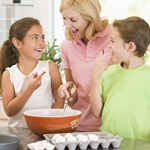
Give your child opportunities to learn about food by helping out in the kitchen. Kids will be more likely to eat what they have helped cook. How could getting your child to help out in the kitchen have anything to do with teaching nutrition? One study published in Journal of Nutrition Education analyzed mothers’ reports of their 3-year-old’s involvement in food-related activities and found that children who were more involved in these activities scored significantly higher on nutrition awareness tests. Following are age-appropriate skills your child can practice in the kitchen:
Ages 3 to 5
- Help set the table
- Tear lettuce into bite-sized pieces for salad
- Pour ingredients into a bowl and help mix
- Help choose a favorite food for the menu
- Toss a salad
- Mix frozen fruit juice concentrate with water
- Snap fresh beans
- Wash fruit, such as grapes and apples
- Slice bananas, soft cheese, and hard-cooked egg with a plastic knife
- Squeeze a lemon or orange
- Help rinse and wash unbreakable dishes
- Peel a hard-boiled egg
- Knead bread dough
- Make a healthy pizza
Ages 6 and up
- Mash potatoes
- Measure ingredients
- Peel vegetables
- Read simple recipes and follow the directions
- Open cans (with supervision)
- Use the microwave oven (with supervision)
- Put away groceries
- Make a shopping list
P is for Presentation
How do you get your child to appreciate the nutritious food you serve? It’s all in the presentation! How foods look matters to kids. Eyes and appetites are directly linked. Here’s some ideas for putting pizzazz into the presentation of the nutritious foods you serve:
- Serve Food in Different Containers: Be a little zany and see the look of surprise on your child’s face! Put pieces of fruit or pasta salad in a muffin tin.
- Garnish Foods: Kids can put slices of oranges or sprigs of parsley on plates. Kids can help wash lettuce leaves and arrange them on a plate, and then add cherry tomatoes, olives, raisins, or grapes as their own creative touch.
- Personalize It: Cut slices of cheese into the shapes of your child’s initials and melt the cheese on bread, or decorate a piece of toast topped with the child’s initials outlined in raisins or banana slices.
- Have your child help you choose tableware, perhaps adding colorful napkins or place mats.
- Experiment with different forms of the same food. For instance, if your child doesn’t go for diced carrots, try carrot “coins” or shredded carrots. Instead of spaghetti noodles, try alphabet noodles, bow tie pasta, or shells.
- Cut foods into shapes. There are many gadgets at the store that can transform ordinary veggies into zig-zags, flowers, and other appetizing shapes.
Q is for Queen (or king) for a Day
Let’s celebrate! On special days, treat your child like royalty, while helping her make healthy meal choices. Let your child choose a special menu for her birthday, half-birthday, or other special day. Look for excuses to celebrate and treat family members like royalty at mealtime. For example, if your child was born on March 11, you could designate the 11th of every month as her day to choose the menu. Decorate the dining room for these special meals. Tie a balloon to the back of the honoree’s chair, or use a special place-setting.
R is for Resolution
Make a resolution with your children to improve family eating habits, then get them involved in carrying it out! Do you want to improve your family’s eating habits? Here are samples of simple food resolutions you can make for the family:
- We will eat more fruits and vegetables, and eat less chips and candy.
- We will order corn-on-the-cob or salad with our burritos or burgers when we eat out instead of french fries.
- We will sit down and plan our weekly menus together.
- We will take turns picking out a new ethnic food to try each week.
Try it for a month, then revisit it. Was your plan successful? What can be done to make it work better?
S is for Snacks and Sugar
Teach children to graze on good food. Explain to your children the difference between feel-good and junk-food snacks: “Your body works better if you eat the right foods. Feel-good snack foods are those that get into your body slowly and aren’t used up fast. They leave you feeling better. Feel-good foods for snacks are yogurt, cereal, homemade cookies, and veggies. Junk-food snacks, such as doughnuts, sodas, cupcakes, candy, and cereals with too much sugar, get into your body quickly and get used up quickly – and you don’t feel good after they get used up. This feeling comes from what is called ‘low blood sugar.’ Now, what snacks would you like to take to school and what snack foods shall we keep in the pantry and refrigerator for when you get hungry or get a snack attack?”
“S” also stands for sugar. Teach your children the concept of steady blood sugar. The sugar story could go like this: Your body, especially your brain, needs a steady supply of food for fuel. When it runs out of fuel, you feel hungry, weak, or just don’t feel good. But if you put the wrong fuel in your body or don’t put enough of it in at the right times, you don’t feel good. Because your body uses up foods for energy very quickly, you have to refill your body often, otherwise it won’t feel or work right, sort of like a car running out of gas. You know when your body is running low on fuel. You feel hungry, tired, weak, maybe even a bit fuzzy-headed. That’s why it’s important to snack or nibble on nutritious foods between meals. In fact, many animals nibble all day long instead of eating breakfast, lunch, and dinner like we do. This is called grazing. Some people feel better and have more energy if they graze on five or six mini meals each day instead of eating three big meals.
T is for Treats and Tally Sheets
Treats don’t always have to be sweets. Today’s children are bombarded with candy treats, sugary snacks, and foods that offer fun, but no nutritional value. Teach your child to appreciate nutritious treats: fresh strawberries, the first apples of fall, fresh corn-on-the-cob, and homemade bread. Talk about why these treats are better than sweets.
Another “T” activity is a tally sheet. Use this sheet to track eating habits in a visual way. Post a copy of the Food Guide Wheel on your refrigerator at your child’s eye level. Beside it post a sheet listing the healthy food groups. Fill it in with stickers or coloring as the day goes on. At the end of the day, see if you’ve met or exceeded your Food Guide Wheel goals.
U is for Underwhelm
Set your child up to finish the food on his plate by starting him out with small portions. A huge plateful of food can overwhelm and take his appetite away. Tiny people have tiny tummies, so children don’t eat as much as adults. Give children a positive sense of accomplishment by giving them servings they can finish. Then they have the opportunity to say, “More please!” Start small, with “underwhelming” portions. How much food should your child be eating? The guideline of one tablespoon (per food group) per year of age may be helpful.
V is for Variety
Variety truly is the spice of life! There are sound reasons for offering children a variety of foods, even if they seem content with a limited menu of old favorites. Even children get bored with food if they see the same ones day after day. It’s hard to enjoy a meal when you’re bored. Offer two choices of fruits and vegetables at meal times — with enough variety on the table, everyone in the family will find something they like to eat. Remember, children like to binge. They like veggies for a few days, then may not touch them for a while. Instead of a balanced meal, shoot for a balanced week.
W is for “Watering” Your Growing Child
Teach your children to acquire a taste of water, the most vital drink of all! Water is essential to good nutrition. Since our bodies are made up of 50 to 60 percent water, we need to continually replenish our fluids. Hidden sources of water include milk or fruit juices, cooked cereal, fruit, and vegetables. Have cold water readily available for your child throughout the day. Keeping it in a pitcher in the refrigerator makes it seem more special, so does an attractive cup or glass and maybe some ice cubes or a twist of lemon. Don’t forget to offer water often during the day, especially in warmer temperatures. If a child is well hydrated, he or she is more likely to have a good appetite.
X is for Xylitol
Nature’s dessert are sweet to eat, thanks to a natural sugar called “xylitol.” Do you like strawberries and raspberries? They contain xylitol, a type of sugar. Teach your children to enjoy nature’s dessert fruits. Since fruit has the extra advantage of being high in Vitamin C and fiber, it makes sense to depend on it to satisfy the sweet tooth of your children. Here are some ideas for healthy desserts made with fruits:
- Fresh fruit kabobs
- Fresh strawberries served in an ice cream cone topped with whipped cream
- Slices of fruit with yogurt dip
- Baked apple or pear
- A milkshake or smoothie made with yogurt and fresh fruit
- Banana bread
- Applesauce topped with graham cracker crumbs
Y is for Yogurt
There are many high calcium foods besides milk — chief among them is yogurt. Teaching your child about building strong bones and teeth goes beyond mentioning milk. There are some children who don’t particularly care for milk, or have milk allergies. Many of these will like or tolerate yogurt. Eight ounces of yogurt contains even more calcium than eight ounces of milk. And, yogurt can be the start of truly creative eating. Let your children add pieces of fruit, chopped nuts, raisins, wheat germ, and other goodies to yogurt. Or, use it as a dip for vegetables or in salad dressings.
Z is for Zest for Good Nutrition
Let your zest for nutrition inspire your children that good eating habits help them grow, feel great and do their best! You want your children not only to know about good nutrition, but truly enjoy eating nutritiously. With you as a guide, your children can learn to appreciate foods that make them feel good. They’ll be eager to eat and enjoy nutritious food. Just remember three important points:
- You are your children’s role model for good nutrition.
- You choose the variety of foods to offer them.
- You can make it fun.
May you have many happy, healthy meals together as your children learn that eating right helps them feel great, do their best, and grow!

Dr. Sears, or Dr. Bill as his “little patients” call him, has been advising busy parents on how to raise healthier families for over 40 years. He received his medical training at Harvard Medical School’s Children’s Hospital in Boston and The Hospital for Sick Children in Toronto, the world’s largest children’s hospital, where he was associate ward chief of the newborn intensive care unit before serving as the chief of pediatrics at Toronto Western Hospital, a teaching hospital of the University of Toronto. He has served as a professor of pediatrics at the University of Toronto, University of South Carolina, University of Southern California School of Medicine, and University of California: Irvine. As a father of 8 children, he coached Little League sports for 20 years, and together with his wife Martha has written more than 40 best-selling books and countless articles on nutrition, parenting, and healthy aging. He serves as a health consultant for magazines, TV, radio and other media, and his AskDrSears.com website is one of the most popular health and parenting sites. Dr. Sears has appeared on over 100 television programs, including 20/20, Good Morning America, Oprah, Today, The View, and Dr. Phil, and was featured on the cover of TIME Magazine in May 2012. He is noted for his science-made-simple-and-fun approach to family health.