
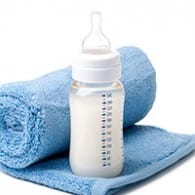
A Parent’s Guide: How Often to Feed Your Baby
This is a very common question we get from parents in our office: How often to feed your baby. The feeding routine may change as your baby grows. The amount and frequency of feedings will also change as the months go by. Below are general guidelines that we recommend:
Between birth and six months of age your baby will need an average of 2 to 2.5 ounces of milk per pound per day. So, if your baby weighs ten pounds, she will need 20 to 25 ounces per day. Here are additional guidelines to follow:
- Newborns may take only an ounce or two at each feeding
- One to two months: 3 to 4 ounces per feeding
- Two to six months: 4 to 6 ounces per feeding
- Six months to a year: as much as 8 ounces at a feeding
Small, more frequent feedings will work better than larger ones spaced farther apart. Your baby’s tummy is about the size of their fist. Take a full bottle and place it next to your baby’s fist and you’ll see why tiny tummies often spit the milk back up when they’re given too much at one time.
Is my baby getting too little or too much milk?
Signs that your baby may be getting too little formula are:
- slower-than-normal weight gain
- diminished urine output
- a loose, wrinkly appearance to baby’s skin
- persistent crying
Signs that your baby is being fed too much at each feeding are:
- a lot of spitting up or profuse vomiting immediately after the feeding
- colicky abdominal pain (baby draws his legs up onto a tense abdomen) immediately after feeding
- excessive weight gain
If these signs of overfeeding occur, offer smaller-volume feedings more frequently and burp baby once or twice during the feeding.