

Sixth Month of Pregnancy Physical Changes
Toward the end of the sixth month of pregnancy, most women continue to feel delighted in being big enough to look pregnant. They usually feel relatively well. Nevertheless, as you round the bend into the last trimester, you may begin to get a hint of the discomforts to come. Here are some new physical changes you may feel during the sixth month of pregnancy:
More Kicks
If the origin of those faint little flutters was previously in doubt, by the sixth month of pregnancy, there’s no question. You are feeling life. The gentle, butterfly-wing flicks of last month are now becoming definite jabs in the sixth month of pregnancy. If you feel the baby kicking several places at once, just remember little thumper has shoulders, elbows, knees, and hands that may all stretch out at once in a uterus in which there is still room enough to maneuver. If your children have not yet felt baby move, get ready for those curious little hands on your abdomen. Once your children feel the kicks, they will continue to get a “kick” out of it and may eagerly anticipate baby’s active times – usually before you go to bed or upon awakening in the morning.
Seeing Movement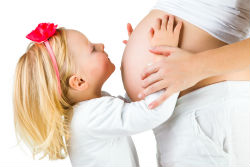

Besides feeling more movement, you can now see it in the sixth month of pregnancy. You may be sitting at your desk and look down periodically to see something pounce from beneath your clothes. If you lie on your back, you can watch areas of the bulge “bubble up” from beneath. It’s natural to respond to these movements by placing your hand above the punch site, acknowledging what you felt. Next month this magnificent sight will be even more noticeable.
Leg Cramps
Toward the end of the sixth month of pregnancy and throughout the last trimester, many women are awakened by knot-like cramps in their calf muscles or feet. These cramps are sometimes blamed on an electrolyte imbalance of calcium, phosphorus, magnesium, and potassium. An additional explanation is the decreased circulation to the most active muscles in your legs. The pressure of the uterus on major blood vessels, as well as standing, sitting, or lying for a long time, can slow blood supply to these muscles, causing them to cramp up.
5 Tips for Relieving Leg and Foot Cramps:
1. Massage the Muscle
These cramps can be extremely uncomfortable and often awaken you with a painful startle. When the cramp occurs, you can massage the cramped muscle or have your mate rub it to promote circulation.
2. Walk It Off
Walk if you can. Getting up and moving around works the best.
3. Stretch It Out
If the cramp is severe, lie in bed, grab the toes of your hurting leg, and pull them back toward your head while keeping your knee straight and as close to the mattress as you can. Remember to stretch gradually, avoiding lunging or bouncing movements, which only aggravate the cramp and may even injure the muscles. If your tummy bulge prevents you from bending forward enough to grab your toes, simply straighten your leg out, pressing the back of your knee into the mattress, flexing your toes toward your head.
4. Try Supplements
While a calcium-phosphorus imbalance is unlikely to be the cause of your leg cramps, if exercises don’t work to relieve leg cramps, you might want to give your calcium supplements a try. Consult with your healthcare provider about taking extra calcium tablets (calcium carbonate) that do not contain phosphorus. In a recent study, women who took magnesium tablets daily experienced fewer leg cramps. Unless your practitioner advises, it is not safe to eat a low-phosphorus diet while pregnant.
5. Exercise the Muscles
The following exercises will help to relieve cramps when they happen, and if you do them faithfully, it may prevent them.
Standing Calf Stretch
Place the leg with the cramped muscles a foot or so behind your other leg. While keeping your back straight, gently bend the knee on the non-cramped leg, so you lean forward while keeping the cramped leg straight and its heel to the floor. (The forward leg also keeps its heel to the floor.) Don’t bounce; just stretch gently. You may find it easier to balance if you press your hands or forearms against the wall while doing this stretching exercise.
Wall Push-Ups
Place your hands flat against the wall and step back until your arms are fully extended. Keeping your feet flat on the floor and your back straight, lean in toward the wall while bending your elbows. You should feel your calf muscles stretch comfortably. If it’s too much of a stretch, stand closer to the wall.
Sitting Leg Stretches
Sitting on the floor, stretch one leg out to the side, foot flexed. Fold your other leg in, foot toward your crotch. While keeping your outstretched leg straight, bend forward and reach toward your toe. Hold this stretched position for a few seconds. Switch sides and repeat. Don’t point your toes straight out and pull your heel toward you since that contracts the muscles that are already cramped.
Numbness and Tingling Hands in the Sixth Month of Pregnancy
Another physical change you might notice in the sixth month of pregnancy is numbness or tingling in the hands. This pins-and-needles or burning sensation usually involves the thumb, first two fingers, and half of the ring finger and may be accompanied by pain in the wrist that can shoot all the way up to the shoulder. Sometimes you may feel soreness when you press the inner surface of your wrist. This condition is known as carpal tunnel syndrome.
Carpal tunnel syndrome is caused by excess fluid that collects around the narrow carpal tunnel beneath the wrist. The nerves pass through this tunnel on the way to your hand, and pressure from the fluid makes them numb or tingly. Carpal tunnel symptoms are likely to occur during the night, after a daylong accumulation of fluid in the wrists, or when you wake up in the morning, especially if you sleep with your arm under your head.
Tips to Ease Carpal Tunnel Discomfort
- Rest your hands more during the day.
- Avoid activities that aggravate the tingling, such as turning your wrist to pour or anything that involves repetitive wrist movements.
- If you work on a computer, type with your wrists in the neutral position, flexed slightly down, rather than with your wrists curved up. Use a wrist rest to help you maintain this position.
- At night elevate the affected hand or hands on a pillow.
- Wear a plastic splint at night to immobilize your wrist in a neutral position. Look for these in the drug store. If needed, your doctor can prescribe a splint that is custom-fitted to your wrist.
- If the pain is particularly aggravating and persistent, a specialist can immediately relieve the discomfort with periodic cortisone injections, which are safe during pregnancy.
Abdominal Muscle Separation
No, you don’t have a hernia. There are two large bands of muscles that run down the middle of your abdomen from your ribs to your pelvic bone. As your uterus grows, it stretches these muscles and pushes them apart, and you may notice that your skin “pooches” out in the area where these muscles have separated. If you run your fingers along the middle of your abdomen between the muscles, you may feel a soft gap where the muscles have separated, and this separation may become more pronounced towards the end of your sixth month of pregnancy and into the next trimester. Sit-ups are inadvisable during pregnancy, even early on.
Your abdominal muscles simply don’t have the strength once this separation starts, even though you may not notice it until your uterus gets large enough to make the separation obvious. By several months after delivery, your rectus muscles come back together and fill in the gap, though most women have a less and less abdominal tone with each subsequent pregnancy.
Leaking Urine during the Sixth Month of Pregnancy
As you enter your sixth month of pregnancy, more pressure will be on your bladder. When you sneeze, cough or belly laugh, your diaphragm contracts and pushes your abdominal contents and uterus down onto your bladder. This causes you to dribble urine if your bladder is full or your pelvic floor muscles are weak. To avoid this nuisance, keep your bladder as empty as possible. Urinate frequently and get into the habit of triple voiding: every time you urinate, bear down three extra times to empty your bladder as completely as you can. Also, to lessen the force on your diaphragm, be sure to open your mouth when you cough or sneeze; keeping your mouth closed causes pressure to build up in your chest and aggravates the problem.
As soon as you deliver the little person who takes up space in your abdomen, your bladder will have more room to expand. In the meantime, a mini pad or a panty liner may be necessary. To strengthen the muscles that control urination, practice Kegel exercises. Contract and release these muscles between urination times as if you imagine you are trying to stop urinating. Don’t use Kegel exercises while urinating, as this might prevent you from emptying your bladder thoroughly, worsening pregnancy incontinence.
Rectal Pain and Bleeding
Hemorrhoids, which are varicose veins in the rectum, are the source of this annoyance that women can experience around the sixth month of pregnancy. The increased blood volume of pregnancy and the pressure of the enlarging uterus on pelvic structures can cause the veins in the rectal wall or around the anal opening to enlarge into pea or grape-sized clusters that bulge out, bleed, itch and sting, especially during the passage of a hard bowel movement. Swollen blood vessels that occur inside the rectum – internal hemorrhoids – may bleed but are usually not painful.
Besides rectal discomfort, one of the first signs of hemorrhoids is fresh, red blood on the toilet tissue you wipe with. Although rectal blood is nearly always nothing more than harmless but irritating hemorrhoids, you should report this symptom to your healthcare provider, who can confirm the diagnosis with an exam. Though they can occur at any time, hemorrhoids usually appear around the sixth month of pregnancy and worsen during the third trimester. They are often at their worst immediately postpartum, after the pushing during delivery, but they shrink after that.
Tips to Prevent Hemorrhoids:
- Avoid sitting for long periods of time, especially on hard surfaces, and sleeping on your back because the weight of the uterus presses on the major blood vessels behind it, causing the blood return from these rectal veins to be even more sluggish.
- Practice your Kegel exercises at least fifty times a day. Tightening your pelvic floor muscles. Especially those muscles around your rectum. This will strengthen the anus and the tissue around it and prevent the stagnation of blood in this area.
- Keep your bowel movements frequent and loose. Eat a fiber-rich diet, drink a lot of fluids, and use a natural stool softener, if necessary.
- Use soft scent-and-dye-free toilet tissue. Use a baby wipe when necessary. (They’re cheaper than the adult towelettes).
- Avoid putting undue pressure on your rectal muscles by straining during a bowel movement. Wipe gently, using more of a patting motion than a rubbing one. When bathing, cleanse your rectal area with a handheld shower instead of vigorous rubbing with a washcloth.
Tips for Treating Hemorrhoids
If you are already dealing with hemorrhoids, try these tips for treating them:
- Apply cool or cold compresses: crushed ice in a clean sock will shrink the vessels and alleviate the pain. Lie on a thick towel to keep water from soaking your sheet.
- To relieve itching, take a short soak in a warm bath to which a half-cup of baking soda has been added. (While warm water can soothe an itchy bottom, it can also dilate blood vessels and further aggravate bleeding, so don’t stay in more than a few minutes.)
- Place a cotton ball or gauze pad soaked in cool witch hazel (or any other medicated pad recommended by your healthcare provider) against the hemorrhoid to help shrink it and ease the discomfort.
- If you must sit on a very sore bottom, buy a rubber donut to place on your sitting surface. Yet, some women find the donut aggravating by putting pressure on the buttocks. Alternately, sit on a pillow, or lean to one side while sitting.
- Check with your doctor before using over-the-counter medication. Some medications can be absorbed through the rectal tissue and into the bloodstream. However, there is little evidence that these ointments are dangerous to babies.
Shooting Pains in Your Lower Back and Legs
You may occasionally feel shooting pains, tingling, or numbness in your lower back, buttocks, outer thighs, or legs. These can start to occur around your sixth month of pregnancy because of relaxing pelvic joints. The baby’s head (or your enlarging uterus) presses on the major nerves that run from the backbone through the pelvis and toward each leg.
Sudden, sharp pain that begins deep in the buttock on one side and travels down the back of that leg is due to pressure on the sciatic nerve in your lower back, hence its name sciatica; it is aggravated by lifting, bending, or even walking. Tingling numbness and pain along the outer thigh is caused by stretching of the femoral nerve to the leg. Rest and a change of position that shifts the pelvic pressure away from these nerves should alleviate the pains. These pains can be very debilitating for some women. They are so variable from woman to woman because of individual differences in pelvic bone structure and shape.
Varicose Veins
Varicose veins are just another of the many side effects of being pregnant that you may start to notice around your sixth month of pregnancy. The hormones of pregnancy relax the muscular walls of veins, causing them to enlarge. These vessels need to expand to accommodate the extra blood volume of pregnancy. Legs are particularly likely to host varicose veins. This is because of the expanding uterus presses on the major blood vessels beneath it. This puts pressure on the veins of the pelvis, sometimes causing blood to pool in the legs.
Hemorrhoids are a type of enlarged vein, and you may notice bulging veins along your vulva. Whether or not you develop varicose veins appearing around your sixth month of pregnancy is mostly a matter of heredity. If you notice that an area around the visible veins of your lower leg has become increasingly painful, red, swollen, warm, or tender, a vein may have become infected; a condition called thrombophlebitis, which is very serious; elevate your leg and notify your healthcare provider.
For more information about pregnancy, see The Healthy Pregnancy Book: Month by Month, Everything You Need to Know from America’s Baby Experts